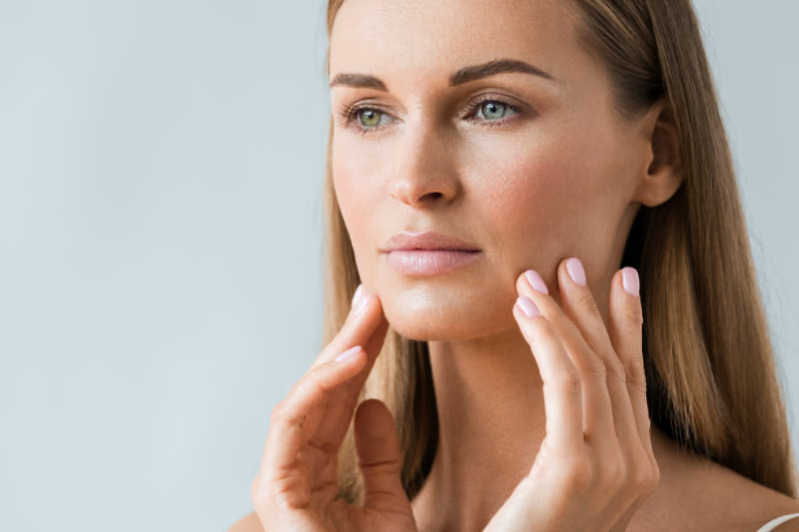

A lip lift shortens the skin between the base of the nose and the red part of the upper lip, raising the upper lip. It is performed through an incision hidden in the natural shadow beneath the nostrils.
This page explains what a lip lift is, how it differs from filler, who it may suit, how the operation is performed and what recovery involves.
What is a lip lift?
The area between the base of the nose and the upper lip is called the philtrum. With age, or from birth, this distance can be long; the red part of the upper lip then looks thin and the upper teeth show less when smiling.
In a lip lift, a strip of skin following the shape of the nostrils is removed from the top of the philtrum, and the lip is moved upward and sutured. No volume is added; more of the lip's own red part becomes visible.
| Feature | Lip lift | Lip filler |
|---|---|---|
| What changes | The nose–lip distance shortens; more red lip shows | Lip volume increases |
| Method | Surgery, skin removed | Injection |
| Duration | Permanent | Temporary, absorbed over months |
| Scar | A fine line beneath the nose | None |
| Suitable for | A long upper lip | A thin lip of normal length |
Who is a candidate?
- People with a long distance between nose and upper lip (usually more than 15 mm)
- Those whose red upper lip is turned inward and looks thin
- Those whose upper teeth show little when smiling
- People who expect a change in lip position rather than volume from filler
- Non-smokers without conditions that impair wound healing
Published systematic reviews report that a subnasal lip lift produces measurable changes in the appearance of the upper lip and in tooth show. The amount of shortening is planned according to the patient's facial proportions.
How is the operation performed?
A lip lift is usually performed under local anaesthesia, with light sedation if wished. It takes 45–60 minutes.
- Planning: the strip of skin to be removed is drawn following the shape of the nostrils; usually 3–6 mm.
- Anaesthesia: the area is numbed with local anaesthetic.
- Skin removal: the drawn strip is removed just below the base of the nose. The muscle is not touched.
- Lift and sutures: the upper lip is moved upward; the incision is closed with deep and superficial sutures.
- Dressing: a fine tape is applied along the incision.
Keeping the incision in the shadow beneath the nostrils and avoiding excessive tension are important for scar quality.
Planning a visit from abroad
| Step | When | What happens |
|---|---|---|
| First contact | Weeks before | Photographs at rest and smiling; preliminary opinion |
| Arrival and consultation | 1 day before surgery | Measurements, facial proportions, informed consent |
| Surgery | Day 0 | Local anaesthesia; discharge the same day |
| Follow-up | Days 5 – 7 | Suture removal, wound check |
| Departure | Day 6 – 7 | Flying is possible after suture removal |
| Remote follow-up | Months 1 – 12 | Photographs; scar care and sun protection at home |
What does recovery look like?
The times below are typical ranges; they vary between individuals and are not a personal guarantee.
| Period | What to expect |
|---|---|
| First 48 hours | Swelling and tightness of the upper lip; speaking and smiling slightly restricted |
| Days 3 – 5 | Swelling begins to subside |
| Days 5 – 7 | Sutures removed; return to desk work for most patients |
| Weeks 2 – 3 | Swelling largely gone; the incision line looks pink |
| Month 3 | The scar starts to fade; additional procedures such as filler can be planned |
| Months 6 – 12 | The scar matures; final appearance settles |
During recovery, avoid wide mouth opening, hard foods and sun exposure, and follow the recommended care for the incision.
What are the risks?
The list below is not exhaustive; individual risks are discussed at the consultation and during the informed-consent process.
- Bleeding, infection
- A noticeable, thick or wide scar
- Asymmetry
- Permanent tooth show from over-shortening
- A widened appearance of the nasal base
- Temporary numbness or stiffness of the upper lip
- Need for a corrective procedure
How is the decision made?
At the consultation the distance between the base of the nose and the upper lip is measured; tooth show when smiling, lip thickness and skin type are assessed. If rhinoplasty is planned, the way the two procedures affect each other is discussed.
If the distance is long and the lip looks thin, a lip lift is considered; if the distance is normal but volume is lacking, lip filler may be the more suitable option. In some patients the two are planned together.
The information on this page is for general guidance only and does not replace a medical consultation. Whether a lip lift is suitable for you can only be determined after an in-person examination.